
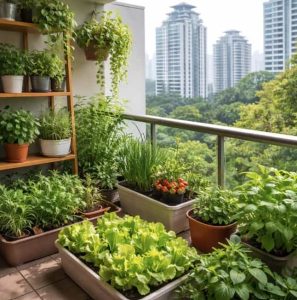
 Balcony gardens are becoming more common in Singapore condos, including developments such as Pinery Residences Tampines, where residents are exploring ways to maximise limited space. Rising food prices, higher electricity bills, and limited space have pushed many residents to look for small, practical ways to cut daily costs. A balcony garden seems simple. Add plants, grow some food, and cool the home. But does it really reduce living costs in a meaningful way, or is it more about lifestyle than savings? The answer sits somewhere in between.
Food costs: modest savings, real value
At first glance, growing food at home looks like a clear way to save money. Herbs like basil, pandan, mint, and spring onions are easy to grow in Singapore’s climate. Leafy greens such as kangkong, chye sim, and lettuce also do well in containers.
These items are not expensive at the supermarket, but they add up over time. A few dollars here and there add up to a steady monthly expense. Growing them at home reduces how often you need to buy them. For frequent home cooks, this can shave a small but steady amount off grocery bills.
Still, balcony gardens will not replace your weekly grocery run. Space is limited. Sunlight varies by unit orientation. And yields are small compared to full-scale farming. You are saving tens of dollars a month, not hundreds. The real value lies in consistency. Having fresh herbs on hand reduces waste and impulse buys.
Startup costs matter
Balcony gardening is not free to start. Pots, soil, seeds, planters, and basic tools cost money. If you go further with vertical racks, drip irrigation, or grow lights, costs rise quickly.
For residents who start simple, the break-even point can come within months. Reusing containers, composting food scraps, and choosing easy crops help control spending. Those who overspend on decorative setups may never see direct savings.
In short, balcony gardens can reduce food costs only if they are treated as practical rather than aesthetic projects.
Energy savings through passive cooling
One of the strongest cost-saving arguments for balcony gardens is energy use. Plants help reduce heat. They shade walls, block direct sunlight, and cool the surrounding air through evapotranspiration.
In Singapore’s climate, air-conditioning is a major expense. Even a small reduction in indoor temperature can reduce how often the air-con runs or how low it needs to be set. A shaded balcony can also lower heat transfer into living rooms and bedrooms.
Studies on urban greenery show that vegetation near buildings can lower surface temperatures. In a condo setting, the effect is modest but noticeable. Residents often report cooler afternoons and less reliance on fans or air-conditioning.
This is where savings become indirect but meaningful. Reduced electricity usage across months and years can outweigh small grocery savings.
Water use: not a deal breaker
Water costs are a common concern. Plants need regular watering, especially in hot weather. However, the added water usage from a small balcony garden is usually minimal.
Many residents collect rainwater, reuse water from washing vegetables, or install simple drip systems that reduce waste. Compared to overall household water use, balcony gardening adds very little to monthly bills.
When done carefully, water costs do not cancel out the savings.
Time and effort have a value, too.
Time is often ignored in cost discussions. Gardening takes effort. Plants need care, pest control, pruning, and occasional replacement. Some people enjoy this. Others see it as work.
If gardening becomes a chore, it may not feel worth the modest financial savings. But for those who already enjoy tending plants, the time spent has personal value beyond money. Reduced stress, better mental health, and a sense of routine all matter, even if they do not appear on a bill.
Long-term household habits
Balcony gardens often change how people think about consumption. Residents who grow food tend to waste less. They plan meals around what is available. They become more aware of seasonal produce and pricing.
This shift in mindset can lead to broader savings. Fewer impulse food purchases. Less takeaway. More home cooking. Over time, these habits can reduce living costs far more than the garden itself.
Condo rules and limitations
Not all condos support balcony gardening. Management rules may restrict water runoff, hanging planters, or structural modifications. Wind exposure at higher floors can damage plants and require sturdier setups.
These limits affect both costs and outcomes. Residents should check the guidelines before investing. A poorly planned setup that violates rules may lead to removal and wasted money.
So, do balcony gardens reduce living costs?
Yes, but within limits.
Balcony gardens in Singapore condo balconies can slightly reduce food spending and lower electricity bills through passive cooling. They work best when kept simple and functional. They are not a major financial solution, but they are a practical support tool.
The biggest savings come indirectly. Better eating habits. Less reliance on air-conditioning. Reduced food waste. Over time, these changes can make a noticeable difference to household expenses.
For residents of Singapore condos, balcony gardens make the most sense when viewed as a small system that supports lower living costs, not a quick fix. They reward patience, restraint, and consistency. And when done right, they pay back quietly, month after month.